Thomas Tiemann

This article is for general information, not medical advice.
Pregnancy rhinitis is nasal congestion that develops during pregnancy and has nothing to do with a cold, the flu, or allergies. It is caused by hormonal changes that swell the lining of your nose, and it can start as early as the first trimester. The good news: it typically goes away on its own within two weeks of delivery.
- Pregnancy rhinitis is hormone-driven congestion, not an infection or allergy.
- It affects a notable share of pregnant people and can last throughout the pregnancy.
- Safe drug-free relief includes saline rinse, a humidifier, head elevation, and nasal strips.
- Many oral decongestants and nasal decongestant sprays carry pregnancy-specific cautions - always check with your provider before using any medication.
- Persistent one-sided symptoms, fever, facial pain, or severe snoring are reasons to contact your doctor.
What Is Pregnancy Rhinitis?
Pregnancy rhinitis is persistent nasal congestion that lasts for six weeks or more during pregnancy, occurs without signs of a respiratory infection, and resolves after delivery. It sits in its own category, separate from allergic rhinitis and from a simple head cold, because the trigger is internal: the dramatic hormonal shifts that pregnancy brings.
The congestion can range from mildly annoying to genuinely disruptive - blocking sleep, forcing mouth breathing, and in some cases contributing to snoring. Because it does not respond to antihistamines and is not caused by a pathogen, many of the usual go-to remedies offer little help, which is why understanding the actual cause matters.
For a broader look at what causes nasal blockage and how to address it, the how to unblock your nose guide covers the full range of structural and non-structural causes.
How Is It Different from a Cold or Allergies?
The distinction usually becomes clear over time. A cold produces other symptoms - sore throat, sneezing, mild fever, body aches - and runs its course in seven to ten days. Allergic rhinitis tends to come with itchy eyes, repetitive sneezing, and a clear link to a seasonal or environmental trigger. Pregnancy rhinitis has none of those features: it is just persistent congestion that appeared after you became pregnant, lingers across weeks, and does not shift with antihistamines or allergy avoidance. If you are unsure which category fits, your midwife or OB can help rule out infection or allergy.
What Causes Stuffy Nose During Pregnancy?
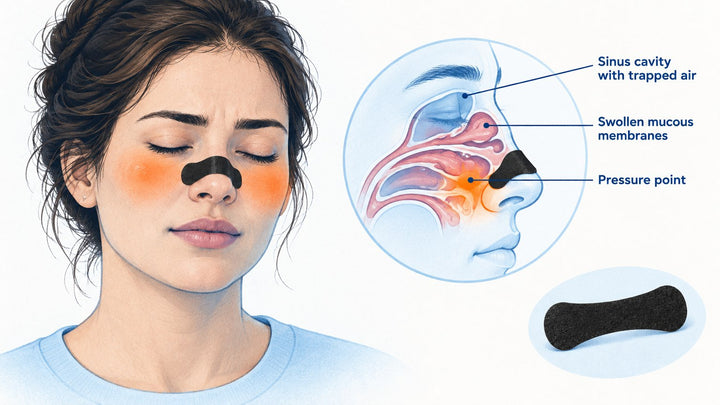
The main driver is estrogen. Rising estrogen levels during pregnancy stimulate the mucous membranes throughout the body, including those lining the nasal passages. The tissue swells, mucus production increases, and the nasal passages narrow - producing the same blocked feeling as a cold without any infection present. Progesterone may also play a role by relaxing smooth muscle in blood vessel walls, increasing nasal blood flow and contributing to that congested, full feeling.
Pregnancy also raises total blood volume significantly, which means the extensive vascular network inside the nose is carrying more blood at higher pressure - another factor that contributes to mucosal swelling.
Because the cause is systemic and hormonal rather than localized, there is no straightforward way to switch it off. The goal instead is to reduce symptoms enough to sleep, breathe comfortably, and get through the day.

When Does It Start and How Long Does It Last?
Pregnancy rhinitis can appear at any point, but it most commonly begins during the second trimester when estrogen levels are climbing steeply. Some people notice it as early as the first trimester. It can persist for the remainder of the pregnancy and, in many cases, for the full third trimester. The defining characteristic of pregnancy rhinitis - what separates it clinically from other causes - is that symptoms resolve within two weeks of delivery once hormone levels begin to normalize.

Safe Relief Options for Congestion During Pregnancy
Drug-free and mechanical approaches are the first line of relief during pregnancy because they carry no known fetal risk. The following steps can be used individually or in combination:
- Saline nasal rinse: A simple saline rinse moistens the nasal lining and helps clear excess mucus. Always use sterile, distilled, or previously boiled-and-cooled water - never tap water directly - to avoid introducing harmful microorganisms into the nasal passages. Pre-filled saline sprays are a convenient ready-to-use option. See the how to use a neti pot guide for technique details.
- Humidifier: Adding moisture to bedroom air can reduce overnight nasal dryness and ease the feeling of congestion. Keep the humidifier clean according to the manufacturer's instructions to prevent mold and bacteria buildup.
- Head and upper-body elevation: Sleeping with your head slightly elevated reduces blood pooling in the nasal tissue overnight. Propping up the head of the mattress or using an extra pillow can make a noticeable difference by morning.
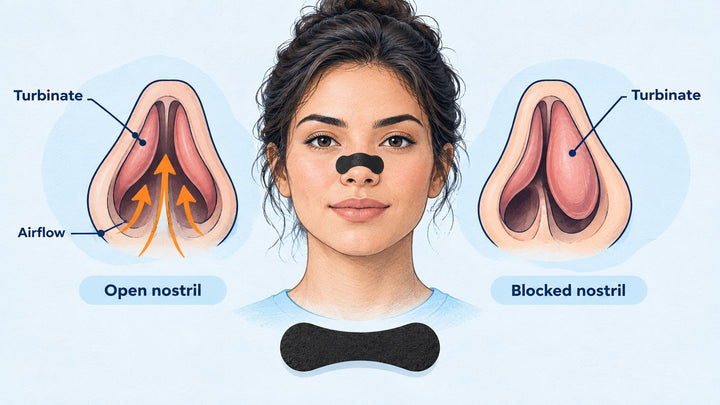
- Nasal strips: An adhesive nasal strip placed across the bridge of the nose mechanically widens the nasal opening, creating more space for airflow without any drug absorption. Because the action is entirely physical, there is no systemic effect. For a curated list of options reviewed specifically for pregnancy, see the best nasal strips for pregnancy.
- Stay well-hydrated: Adequate fluid intake helps keep nasal secretions thinner and easier to clear.
- Avoid known irritants: Cigarette smoke, strong perfumes, and dry or dusty environments can aggravate already-swollen nasal tissue. Where possible, minimize exposure.
How Nasal Strips Can Help
A nasal strip works by gently springing open the sides of the nose at the nasal valve - the narrowest part of the nasal passage - to increase the effective airway area. Because pregnancy rhinitis narrows that passage through mucosal swelling, even a modest widening can make breathing noticeably easier, particularly at night when lying down makes congestion worse.
Nelamant Air nasal strips use a wider lift design that distributes support evenly across the bridge rather than pulling from a single point. The extra-hold adhesive is formulated to stay in place through the night even with the increased skin oils and moisture that pregnancy can bring, and the materials are designed to peel off cleanly without leaving residue on skin that may already be more sensitive than usual. The action is mechanical and drug-free, which makes it compatible with pregnancy without the medication safety questions that oral or topical decongestants raise.
What to Avoid
Decongestant nasal sprays - including common over-the-counter products like oxymetazoline - are generally not recommended during the first trimester and carry specific cautions throughout pregnancy. Beyond pregnancy, using them for more than three consecutive days can cause rebound congestion, worsening the very problem you are trying to solve. Oral decongestants such as pseudoephedrine also carry pregnancy-specific guidance and are typically avoided, especially in the first trimester. Do not use any medication - prescription or over-the-counter - during pregnancy without first confirming it is appropriate for you with your healthcare provider.
Inhaling steam from a bowl of boiling water is not recommended; the risk of burns and scalding is not worth it when safer alternatives exist. If you are unsure which over-the-counter options are safe for your specific situation, the when to see a doctor for nasal congestion guide outlines the situations where professional guidance is the right call.
Pregnancy Rhinitis and Sleep
Disrupted sleep is one of the most common complaints that comes with pregnancy rhinitis. When nasal congestion forces mouth breathing through the night, sleep quality drops, morning headaches are more common, and fatigue compounds the other demands of pregnancy. Blocked nasal passages also increase upper airway resistance, which can cause or worsen snoring - a pattern that becomes more common as pregnancy progresses and weight and hormonal changes accumulate.
Snoring during pregnancy is worth paying attention to. Occasional congestion-related snoring is common and generally resolves after delivery, but loud or frequent snoring - especially if a partner notices pauses in breathing or gasping - can sometimes signal a more significant sleep-breathing issue. The why do women snore guide explains the specific hormonal and anatomical factors that make snoring more common during pregnancy and what distinguishes simple congestion-related snoring from patterns worth investigating further.
Practical steps that help most: keep the bedroom air moist, elevate the head of your sleeping surface, use a nasal strip to widen the nasal opening before bed, and try sleeping on your side rather than your back, which already tends to be the recommended position during pregnancy for circulation reasons.
When to See a Doctor
Most pregnancy rhinitis is uncomfortable but not dangerous, and it does not require medical treatment. Contact your midwife, OB, or doctor if you notice any of the following:
- Fever, facial pain, or sinus pressure - these suggest a sinus infection rather than hormonal rhinitis and may need treatment.
- One-sided congestion or one-sided nosebleeds - asymmetric symptoms that do not alternate from side to side are worth evaluating to rule out a structural cause.
- Thick yellow or green discharge - this points toward infection, not pregnancy rhinitis alone.
- Symptoms that started before pregnancy or that fit a clear seasonal pattern - undiagnosed allergic rhinitis during pregnancy has its own management considerations.
- Loud snoring with witnessed pauses in breathing or gasping - pregnancy-related sleep apnea is underdiagnosed and carries risks for both mother and baby; it needs formal evaluation rather than home management.
- Congestion severe enough to prevent adequate sleep or eating - significant quality-of-life impairment is a valid reason to seek guidance rather than simply endure it.
See when to see a doctor for nasal congestion for a more complete list of warning signs across all types of nasal congestion. If snoring is a concern, the snoring vs. sleep apnea guide explains the difference and which symptoms warrant a sleep study.
Frequently Asked Questions
Is pregnancy rhinitis the same as a sinus infection?
No. A sinus infection (sinusitis) typically involves thick discolored mucus, facial pain or pressure, and sometimes fever. Pregnancy rhinitis produces persistent clear congestion without those additional symptoms. If you develop facial pain, fever, or colored discharge, contact your provider - those warrant evaluation for infection.
Can I use a nasal decongestant spray while pregnant?
Most healthcare providers advise against using decongestant nasal sprays, particularly in the first trimester, and recommend caution throughout pregnancy. They also risk causing rebound congestion if used for more than three consecutive days. Always confirm any medication use with your OB or midwife before starting, and do not stop any prescribed treatment without their guidance.
Do nasal strips work for pregnancy congestion?
Nasal strips work mechanically - they spring the sides of the nose gently outward to widen the nasal opening. If pregnancy rhinitis is narrowing your nasal passages through mucosal swelling, a strip can create enough additional airflow to make breathing easier, particularly during sleep. They do not reduce the underlying swelling, but they increase the usable airway space. Because they are drug-free, they avoid the medication safety questions that apply to decongestants during pregnancy.
Does pregnancy rhinitis go away after birth?
Yes, in most cases. Pregnancy rhinitis is defined in part by its resolution within approximately two weeks of delivery, once estrogen and progesterone levels begin returning to pre-pregnancy ranges. If significant congestion persists beyond that window, it is worth checking whether another cause - such as allergic rhinitis or a structural issue - was present alongside or instead of the hormonal cause.
Can pregnancy rhinitis cause snoring?
It can contribute to it. Swollen nasal passages reduce airflow and push breathing toward the mouth, which increases upper airway turbulence and the likelihood of snoring. Widening the nasal opening with a strip and sleeping on your side can reduce congestion-driven snoring. If the snoring is loud, frequent, or accompanied by gasping or witnessed breathing pauses, speak with your provider about whether a sleep-breathing assessment is appropriate.
The Bottom Line
Pregnancy rhinitis is one of the more overlooked discomforts of pregnancy - real, persistent, and frustrating, but almost always temporary. Understanding that the cause is hormonal rather than infectious explains why antihistamines do not help and why patience, combined with practical mechanical and environmental strategies, is the main management approach. Saline rinse, humidity, head elevation, and a drug-free nasal strip address the symptom without introducing medication risk. If symptoms escalate, become one-sided, or involve concerning snoring, reach out to your provider rather than managing alone.
For a broader toolkit of congestion relief strategies that applies beyond pregnancy, the how to unblock your nose guide is a practical starting point.