Thomas Tiemann

Yes, nasal strips can help with congestion-but only when the blockage involves a narrowed or partially collapsed nasal passage, not when the problem is deep sinus pressure or thick mucus. They work by physically lifting the sides of your nose outward, which widens the airway and reduces resistance so air flows through more easily. If you do nasal strips help congestion is the question you're asking before bed with a stuffed-up nose, the honest answer is: often enough to be worth trying, as long as you know what they can and can't do.
- Nasal strips open your nasal passages mechanically-they don't shrink swollen tissue or clear mucus.
- They work best when congestion is narrowing the outer nasal valve, such as during a cold, allergies, or nighttime stuffiness.
- They won't relieve deep sinus pressure, polyps, or congestion caused by overused decongestant sprays.
- For nighttime use, an extra-hold strip that stays on through sleep makes the biggest practical difference.
- Strips are one tool; pairing them with other methods usually gives better relief than any single approach.
How Nasal Strips Open a Stuffy Nose
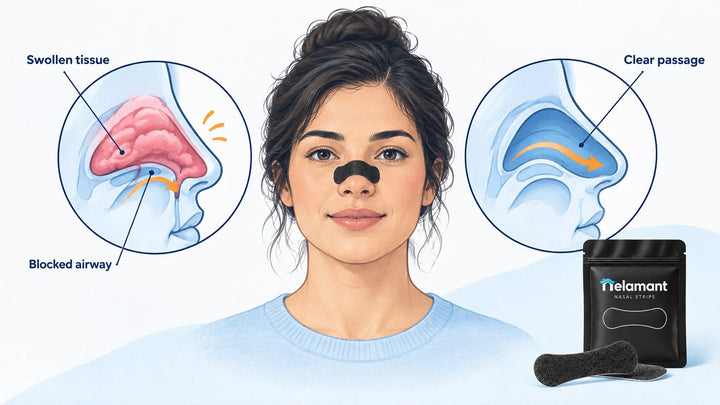
A nasal strip is a spring-band worn across the bridge of your nose. The band tries to straighten after you stick it down, and that outward recoil gently pulls the sides of your nose away from the center. The result is a wider nasal valve opening-the narrowest part of your nasal airway-which lowers the resistance air meets on its way in and out.
That mechanism is entirely physical. There are no drugs, no active ingredients, and no interaction with medication you may already be taking. For a fuller look at the mechanics and what the evidence says overall, see do nasal strips work.
What congestion actually is
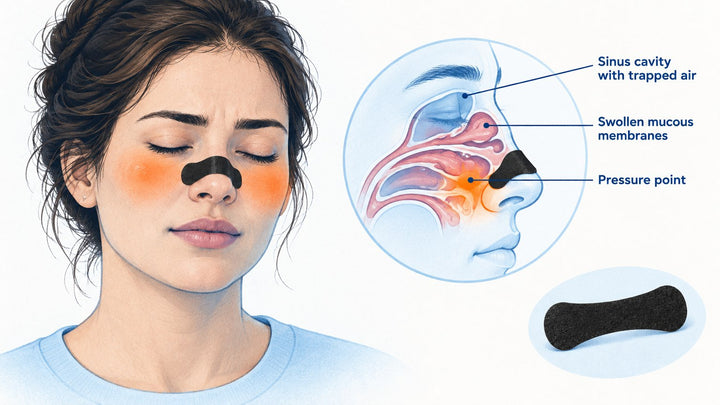
Congestion can mean different things, and that distinction matters when you're deciding whether a strip will help. In most common cases-a cold, seasonal allergies, dry air-the soft tissue lining your nasal passages swells and narrows the airway, sometimes with mucus adding to the blockage. In other cases the nose feels blocked but produces very little mucus, which usually points to a structural or airway-pressure issue rather than inflammation.
A nasal strip can widen the passage from the outside, but it does nothing to reduce the swelling or thin the mucus. Think of it as holding a door open a little wider-it helps you get through, but it doesn't fix the door frame. For a broader set of strategies that address different causes of a blocked nose, the full guide to how to unblock your nose covers the range of options.
What the strip physically does
When you press a strip across your nose and let go, the spring band inside it tries to return to its flat resting shape. That force is transmitted to the skin on either side of the nasal bridge and pulls the nasal walls outward. The nasal valve-the area just inside your nostril that controls most of airflow resistance-widens slightly as a result. Even a small increase in the diameter of a tube produces a meaningful drop in resistance, which is why many people notice the difference immediately when they put a strip on.
When Nasal Strips Help a Stuffy Nose
Cold and allergy congestion
During a cold or an allergy flare, the nasal lining swells and the already-narrow nasal valve gets even tighter. A strip won't stop the swelling, but it can counteract some of the narrowing from the outside and make breathing noticeably easier. Many people find this most useful at night, when lying down shifts blood pressure toward the head and makes nasal congestion feel worse. The strip keeps the valve propped open even when your body's position works against you.
Nighttime stuffiness
Nighttime congestion is one of the most practical use cases for nasal strips because the alternative-breathing through your mouth all night-tends to leave you with a dry mouth, sore throat, and poor sleep. A strip that stays in place through movement and overnight sweat makes a real difference here. This is where adhesive quality matters: a strip that peels off at 2 a.m. doesn't help anyone. For more on managing a blocked nose specifically during sleep, see how to sleep with a stuffy nose, which pairs strips with positioning and humidity strategies.
Nose feels blocked but no mucus
If your nose feels blocked but there's no mucus to speak of, the cause is often nasal valve narrowing rather than inflammation-which is exactly what strips are designed to address. This scenario is covered in detail in the guide to nose feels blocked but no mucus, where structural causes and mechanical solutions are explored more fully. A strip is often the first thing worth trying in this situation.
When Nasal Strips Won't Fix Congestion
Knowing the limits of nasal strips saves you frustration. There are several types of congestion where a strip will make little to no difference, and understanding them helps you reach for the right tool.
Congestion from sinus pressure
If the heaviness and blockage you feel is centered behind your cheeks or forehead-classic sinus pressure from an infection or sinusitis-a nasal strip won't relieve it. The strip acts at the outer nasal valve, well upstream of the sinus cavities. You may still breathe a little easier through your nose while wearing one, but the pressure itself won't change. Sinus pressure relief calls for different approaches: saline rinses, steam, and in some cases medication or medical care.
Structural causes
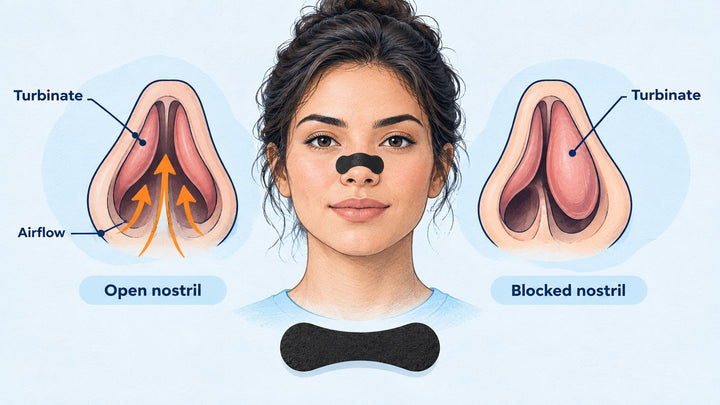
Some people have a deviated septum, enlarged turbinates, nasal polyps, or nasal valve collapse that creates chronic blockage regardless of inflammation. A strip may offer partial relief by widening the outer valve, but it doesn't straighten a septum or shrink tissue. If your congestion is persistent and doesn't respond to standard treatments, a structural cause is worth discussing with a doctor. Brief summaries of these conditions live in their own guides; this article doesn't reproduce those details.
Rebound congestion from overused sprays
Decongestant nasal sprays are effective short-term, but using them for more than a few days in a row can cause rebound congestion-the tissue swells more once the spray wears off, creating a cycle. A nasal strip does nothing to break that cycle; the tissue swelling is happening regardless of what's going on at the nasal valve. If you suspect rebound congestion is part of your problem, the dedicated guide on rebound congestion explains how it develops and how to address it.
How to Use a Nasal Strip for Congestion

- Wash and dry the area. Clean skin is the single biggest factor in how well the strip sticks. Wash your nose bridge with mild soap, rinse thoroughly, and pat completely dry. If you've just applied a moisturizer or lotion, wipe it off with a dry cloth first-any residue will undermine adhesion.
- Peel the backing carefully. Remove the protective liner without touching the adhesive surface. Oils from your fingertips transfer easily and reduce stickiness.
- Center the strip across the flare of your nostrils. The strip should sit across the widest part of the nose, not up near the bridge bone. Press down from the center outward, smoothing both ends firmly against the skin.
- Hold for a few seconds. Press the entire strip flat and hold for five to ten seconds to let the adhesive bond with your skin. You should feel a gentle outward pull when you release-that's the spring doing its job.
- Remove gently in the morning. Wet the strip with warm water for a minute before peeling. Start from one edge and work slowly, keeping the strip parallel to the skin rather than pulling straight out. A good strip should come off cleanly without leaving a sticky residue.
Nasal Strips for Congestion vs. Other Options
Nasal strips work alongside other congestion tools rather than replacing them. Here's a quick comparison to help you decide how to combine them:
| Option | What it does | Best used for |
|---|---|---|
| Nasal strip | Mechanically widens nasal valve | Narrowed passage, nighttime breathing, valve congestion |
| Saline rinse | Flushes mucus and irritants | Mucus-heavy congestion, post-nasal drip |
| Decongestant spray | Shrinks swollen tissue temporarily | Short-term relief of swelling (max a few days) |
| Humidifier | Adds moisture to air | Dry-air congestion, overnight comfort |
| Antihistamine | Reduces allergic inflammation | Allergy-driven congestion |
For a curated breakdown of which strips perform best specifically for congestion, the roundup of best nasal strips for congestion compares the top options side by side.

Nelamant Air for Congestion
If you're going to use a nasal strip for congestion, the adhesive and lift design matter more than they might seem. When you're congested, your nose may be running or oily, and a strip that can't hold on through that isn't doing you any good by 3 a.m.
Nelamant Air uses an extra-hold adhesive formulated to resist sweat and oil, and a wider spring band designed to deliver a broader, more balanced lift across the nose bridge rather than a single-point pull. The material is intended to be gentle on skin-relevant when you're already dealing with a nose that's been wiped raw from a cold. It's drug-free, so there's nothing to interact with a decongestant or antihistamine you may be taking at the same time. One strip covers a full night; the pack holds 30, which is a month of nightly use at $14.99.
Frequently Asked Questions
Do nasal strips help congestion from a cold?
Yes, in most cases. During a cold, swollen nasal tissue narrows the airway, and a nasal strip widens it from the outside. The strip doesn't treat the cold itself or reduce inflammation, but it can make nose breathing noticeably easier while the congestion is at its worst-especially at night when lying down makes blockage feel worse.
Can nasal strips help a stuffy nose at night?
This is actually one of the best use cases for nasal strips. Nighttime congestion tends to be worse because of the horizontal position and reduced clearance from swallowing. A strip that stays on through movement and overnight perspiration keeps your nasal valve open while you sleep, reducing the chance you'll shift to mouth breathing and wake up with a dry throat.
Do nasal strips help with sinus pressure?
Not directly. Sinus pressure originates behind the face in the sinus cavities, and a strip only acts at the outer nasal valve. You may breathe a little more easily through your nose while wearing one, but the pressure and fullness behind your cheeks or forehead won't be relieved by a strip alone.
How long do nasal strips take to work for congestion?
The mechanical effect is immediate-you should feel the airway open within a minute or two of putting the strip on. There's no absorption or activation time because the action is purely physical. If you don't feel any difference within a few minutes, the strip may not be positioned correctly or the adhesive may not have bonded fully; try repositioning on clean, dry skin.
Are nasal strips safe to use every night when you're congested?
For most adults, yes. Nasal strips are drug-free and act only on the outer surface of your nose, so nightly use during a bout of congestion carries no known systemic concerns. The main consideration is skin: if you notice redness or irritation from the adhesive, give your skin a night off or switch to a strip made with materials. If your congestion persists beyond a couple of weeks without an obvious cause, that's worth a conversation with a doctor rather than an ongoing nightly strip routine.
The Bottom Line
Nasal strips help congestion when the problem is a narrowed nasal passage-which covers a lot of common situations like colds, allergies, and nighttime stuffiness. They don't shrink swollen tissue, drain your sinuses, or reverse rebound congestion from spray overuse, so knowing the difference helps you use them where they actually deliver. When the cause is right, slipping a strip on before bed is one of the simplest, drug-free things you can do to breathe more easily through the night.