Thomas Tiemann

This article is for general information, not medical advice.
When your nose feels blocked but no mucus is there to blow out, the obstruction is almost always swollen tissue or a narrow airway - not congestion in the traditional sense. Your nasal passages can close down without producing a drop of mucus, leaving you breathing through your mouth and wondering what is going on. For a broader look at clearing a blocked nose, see how to unblock your nose.
- A blocked nose without mucus is usually caused by inflamed or swollen nasal tissue, not fluid buildup.
- Common triggers include allergens, dry air, hormonal changes, and overused decongestant sprays.
- Structural factors - such as a deviated septum or narrow nasal valve - can produce the same sensation permanently or intermittently.
- Humidifying your air, saline rinsing, and mechanical nasal dilators can all ease the obstruction without medication.
- Persistent, one-sided, or worsening blockage warrants a doctor visit.
Why Your Nose Can Feel Blocked Without Mucus
Most people associate a stuffy nose with excess mucus, but the feeling of blockage and the presence of mucus are two separate things. The sensation of obstruction comes from reduced airflow through the nasal passage - and airflow can be reduced by swollen tissue just as effectively as by thick mucus.
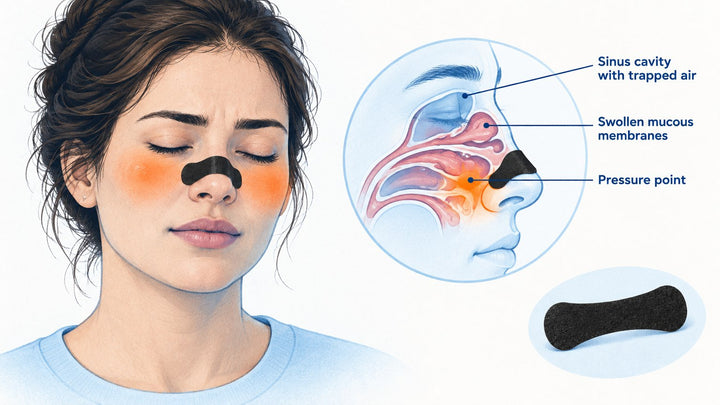
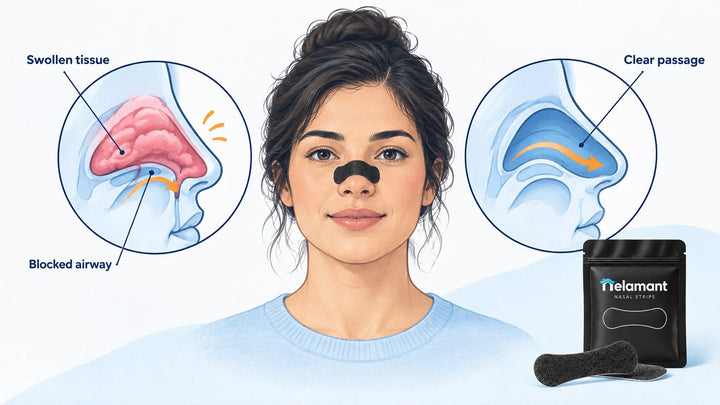
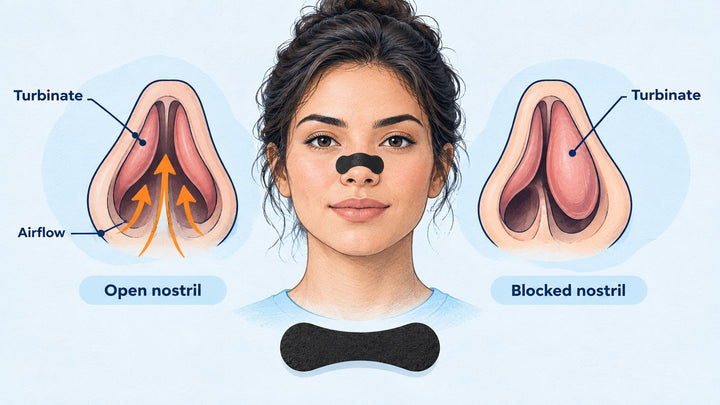
Inside your nose, soft tissue structures called turbinates help warm and humidify incoming air. When those tissues swell - from an allergen, a change in temperature, dry air, or a hormonal shift - they physically narrow the channel air travels through. You feel blocked, but there is nothing to blow out.
Swollen nasal tissue and turbinate congestion
The turbinates are the most common culprit. They swell and shrink throughout the day in a natural cycle, which is why many people notice one nostril feeling more blocked than the other at any given time. When an irritant or inflammatory trigger pushes that swelling beyond the normal cycle, the blockage can feel persistent and uncomfortable even with no mucus involved.
Nasal valve narrowing
The nasal valve is the narrowest part of the nasal airway, just inside the nostril. When the supporting cartilage is weak, overly flexible, or anatomically narrow, the walls can partially collapse inward during inhalation, restricting airflow. This produces a blocked feeling that has nothing to do with mucus and does not respond to decongestants. The full picture of this condition is covered in the guide to nasal valve collapse.
Common Causes of a Stuffy Nose Without a Cold
A stuffy nose without a cold can have several distinct origins. Identifying the most likely one for your situation points you toward the right solution.
Allergies and environmental triggers
Dust mites, pet dander, mold spores, and pollen all trigger an inflammatory response in the nasal lining. The result is swollen, irritated tissue that restricts airflow - often without the runny nose that comes later in a full allergic reaction, or after the initial watery discharge has cleared. This is one of the most frequent causes of a stuffy nose without a cold, particularly first thing in the morning or at night when you have been lying near allergens for hours.
Dry air and low humidity
In low-humidity environments - heated rooms in winter, air-conditioned spaces in summer - the nasal mucous membrane dries out and can become slightly inflamed. That dryness itself can cause a tight, blocked feeling even when no excess mucus is present. Running a humidifier in your bedroom is one of the simplest ways to address this; keep the unit clean to avoid mold growth, and use distilled or demineralized water where the manufacturer recommends it.
Hormonal changes
Hormonal fluctuations - particularly during pregnancy - can cause the nasal lining to swell independently of any infection or allergen. This is called pregnancy rhinitis, and it affects a significant number of pregnant people during the second and third trimesters. The full guide to pregnancy rhinitis covers management options and safety considerations specific to that situation.
Rebound congestion from decongestant overuse
Using an over-the-counter decongestant nasal spray for more days than the label recommends can cause the nasal lining to become dependent on the medication. When the spray wears off, the tissue swells back - often worse than the original problem. This cycle is called rebound congestion, and it can leave you with a persistently blocked nose and very little mucus. The guide to rebound congestion explains how to break the cycle safely. Always follow the duration stated on the medication label.
Structural factors
A deviated septum - where the wall dividing the two nasal passages sits off-center - can create a chronically narrower passage on one side. Combined with even mild turbinate swelling, this can produce a consistently blocked feeling on that side, particularly noticeable at night when lying down shifts blood flow toward the head. Structural issues do not cause mucus; they simply reduce the space air has to travel through.
How to Relieve a Blocked Nose When There's No Mucus
Because mucus is not the problem, blowing your nose will not help much. The goal instead is to reduce tissue swelling, open the nasal passage physically, or address whichever root cause is driving the inflammation.
- Add moisture to the air. Run a clean humidifier in your bedroom at night, aiming for indoor humidity between roughly 40 and 50 percent. Moist air reduces the drying and irritation that causes turbinate tissue to swell, and it can noticeably ease a blocked feeling by morning.
- Use a saline rinse. A saline spray or nasal rinse moistens and soothes the nasal lining and can temporarily reduce mild tissue swelling. Always use sterile, distilled, or boiled-and-cooled water - never tap water directly from the faucet - to avoid any risk of introducing microorganisms. Follow the instructions for whichever device you use.
- Open the nasal passage mechanically. If the blockage comes from a narrow or collapsing nasal airway rather than from swollen internal tissue, physically widening the nostril opening can make a real difference. External nasal strips work by gently springing the sides of the nose outward, reducing the resistance that makes breathing feel labored. Nelamant Air nasal strips use a wider, balanced lift across the bridge rather than a single pull point, which keeps the opening even overnight. If you want to understand how well this approach works for congestion, the guide to whether nasal strips help congestion covers what they can and cannot do. You can also go straight to the Nelamant Air product page if you want to try a pack.
- Reduce allergen exposure. If allergies are the likely cause, wash bedding weekly in hot water, keep bedroom doors closed to pets, and consider an air purifier with a HEPA filter for the bedroom. Reducing the allergen load reduces the inflammatory trigger, which reduces the swelling.
- Stop or step down overused decongestant sprays. If you have been using a decongestant nasal spray beyond the label-recommended duration, talk to a pharmacist or doctor about stepping down safely. Do not simply stop a prescribed treatment without guidance.

When Only One Nostril Is Blocked
If the blockage is consistently or predominantly on one side, it is worth noting separately. The nasal cycle - a normal alternation in airflow between nostrils - means some asymmetry is completely typical and shifts every few hours. But a blockage that is always on the same side, or that becomes more pronounced when you lie on a particular side, often points to a structural difference such as a deviated septum or localized turbinate enlargement. The dedicated guide to one nostril feeling blocked covers why this happens and what to do about it.
Drug-free mechanical lift. extra-hold adhesive. Peels off cleanly in the morning.
$14.99 for 30 strips · 30-day returns
Shop Nelamant Air
When to See a Doctor for Nasal Congestion
Most cases of a blocked nose without mucus resolve once you identify and address the trigger. But some situations call for professional evaluation. Reach out to a doctor if:
- The blockage has lasted more than 10 to 14 days with no clear cause.
- Only one nostril is consistently blocked, especially if it is getting worse.
- You notice nasal polyps, facial pain, or reduced sense of smell alongside the blockage.
- You have been using a decongestant spray for longer than recommended and cannot stop without the congestion returning immediately.
- The blocked feeling is significantly disrupting your sleep, and self-care measures have not helped.
- You have other symptoms - unexplained nosebleeds, one-sided facial swelling, or vision changes - that accompany the nasal obstruction.
For a full checklist of warning signs specific to nasal and sinus symptoms, see the guide on when to see a doctor for nasal congestion.
Frequently Asked Questions
Why does my nose feel blocked but I can't blow anything out?
The blocked feeling comes from reduced airflow, not necessarily from mucus. Swollen turbinate tissue, a narrow nasal valve, dry nasal membranes, or a structural issue like a deviated septum can all restrict airflow without producing mucus to blow out. The sensation is real - the airway is genuinely narrower - but blowing will not clear it.
Can allergies cause a stuffy nose without mucus?
Yes. Allergens like dust mites, pet dander, and pollen trigger inflammation in the nasal lining. Early in a reaction, or when exposure is low-level and ongoing, the dominant effect can be tissue swelling without a significant increase in mucus production. A dry, tight, blocked feeling - particularly in the morning or at night - is a common presentation of mild allergic rhinitis.
Is a blocked nose with no mucus a sign of something serious?
Usually not. Dry congestion from allergens, dry air, or structural factors is common and manageable. However, a persistent one-sided blockage, especially if it is worsening, loss of smell, facial pain, or nosebleeds accompanying the blockage are all reasons to see a doctor and get a proper evaluation.
Does dry air make your nose feel blocked?
It can. In dry conditions, the nasal mucous membrane loses moisture and becomes mildly inflamed. That inflammation narrows the passage and produces a blocked or tight sensation even without excess mucus. A humidifier in the bedroom - kept clean and used with appropriate water - often provides noticeable relief overnight.
Can a nasal strip help when there's no mucus?
It can, depending on where the restriction is. If the blockage is at or near the nasal valve - the narrowest external part of the airway - a nasal strip's outward spring force increases the opening and can meaningfully improve airflow. If the restriction is deeper inside from swollen turbinates, a strip alone will not fully resolve it, but many people find it still reduces the effort of breathing. The guide to whether nasal strips help with congestion explains the mechanism in detail.
Why does only one nostril feel blocked at a time?
This is often the normal nasal cycle at work - your body alternates airflow dominance between nostrils roughly every few hours. If it is always the same side, or noticeably worse on one side when you lie down, a structural cause such as a deviated septum is more likely. See the full explanation in the guide to one nostril feeling blocked.
The Bottom Line
A nose that feels blocked but no mucus is there to clear is almost always a tissue or airway problem, not a fluid problem - and that changes what will actually help. Moisture, reduced allergen exposure, and mechanical support for the nasal opening are the most practical starting points. If the blockage persists or worsens, or if it is consistently one-sided, a doctor can identify whether something structural needs attention.