Thomas Tiemann

Yes, you can use nasal strips every night. Because they work mechanically - gently lifting the sides of your nose outward to widen the nasal passage - there is no drug involved and no chemical tolerance to build up. For most healthy adults, nightly use is perfectly reasonable as a routine habit.
- Nasal strips use a spring-tab mechanism - no drugs, no rebound effect, no tolerance.
- Nightly use is generally fine for healthy adults; skin sensitivity is the main thing to watch.
- Single-use strips should be replaced each night - never re-used.
- If congestion, snoring, or breathing difficulty persists despite nightly use, look into the underlying cause.
- Cost works out to roughly $0.50 per night at standard pack pricing.
To understand exactly why nightly use is safe from a pharmacological standpoint, it helps to know how nasal strips work and why the design matters - the short version is that the strip's spring tabs create outward lift with no active ingredients at all.
How Nasal Strips Work on a Nightly Basis
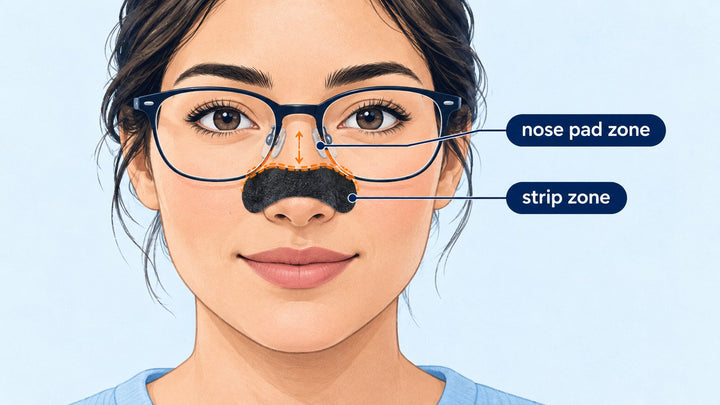
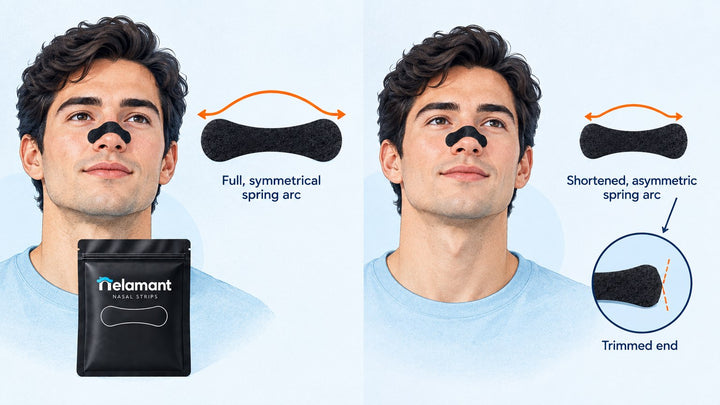
A nasal strip sits across the bridge of your nose and uses stiffened spring-like bands to gently pull the nasal walls outward. That physical widening reduces airflow resistance so breathing through your nose takes less effort. The moment you peel the strip off, your nose returns to its normal shape.
Nothing is absorbed. Nothing accumulates. Your body does not adapt to the strip the way it might adapt to a decongestant spray. That distinction matters a lot for nightly use: the mechanism that makes the strip work on night one is exactly the same mechanism at work on night one hundred.
For a deeper look at the spring-tab design and why strip width affects how evenly the lift is distributed, see how nasal strips work and why the design matters.
Is It Bad to Wear Nasal Strips Every Night?
For the vast majority of adults, no - wearing a nasal strip every night is not harmful. The main practical consideration is your skin, not your nose. Applying and removing an adhesive product from the same patch of skin night after night deserves a little attention.
If you have concerns about everyday safety more broadly - allergic reactions, skin conditions, or specific health situations - are nasal strips safe covers those scenarios in detail.
Skin Sensitivity and Adhesive Reactions
Some people notice mild redness or slight irritation at the adhesive contact points, particularly if they remove the strip too quickly or have naturally sensitive skin. This is the most common downside of regular use - not the nasal passage itself, but the skin bridge of the nose.
A few habits reduce that risk:
- Remove slowly, pressing the skin down as you peel - don't pull sharply upward.
- Give the adhesive a moment to warm up before peeling; a damp fingertip along the edge helps.
- Let skin breathe during the day - avoid applying a new strip to visibly irritated skin.
Any adhesive can cause skin irritation. If redness, rash, or persistent soreness develops, pause use and let the skin recover.
No Drug Tolerance or Dependency
Rebound congestion - the stuffiness that can worsen after stopping certain nasal decongestant sprays - is not a risk with adhesive nasal strips. There is no active ingredient to rebound from. Stopping nightly use simply means your nose no longer gets the mechanical lift; it does not cause any new symptom or withdrawal-type reaction.
Nasal Strips Long Term Use: What to Expect
With nasal strips long term use, most people settle into a straightforward nightly routine: apply before bed, peel off in the morning, discard. Because each strip is single-use, there is no hygiene concern from reusing a worn strip - and trying to reuse one means losing most of the adhesive hold and structural lift anyway.
One thing nightly use does not do is change your nasal anatomy. Your nose will not widen permanently, nor will the tissue adapt to rely on external support. For more on that specific question, how long you can wear a nasal strip covers wear duration and what happens when the strip comes off.
When Nightly Use Makes Sense
Nightly use fits naturally into a few consistent situations:
- Sleep comfort: If nasal congestion or mild snoring from nasal restriction disrupts your sleep, a strip each night supports easier breathing through the nose. Nasal strips for sleep, snoring, and a more comfortable night explains how the lift translates to sleep quality.
- Seasonal or chronic congestion: Allergies, a dry bedroom environment, or a mild structural narrowing can make nose breathing harder every night - strips provide consistent nightly relief without medication.
- Building a breathing habit: Some people use strips as a cue to breathe through the nose while sleeping, pairing them with other sleep-hygiene changes.
When to Re-evaluate
Nasal strips open the nasal valve area. They do not clear mucus, reduce swollen turbinates, or affect the throat. If you find that a strip every night still leaves you waking up congested, mouth-breathing, or tired, the problem likely goes beyond what external nasal support can solve on its own.
Persistent congestion that does not respond to strips may point to allergies, structural issues, or other causes worth discussing with a clinician. Similarly, loud snoring that continues despite nightly strip use - especially snoring accompanied by gasping or daytime sleepiness - warrants a proper evaluation rather than a nightly strip as a long-term substitute.
Getting the Most from Nightly Use
Consistent results from nightly use come down to consistent application. The adhesive needs clean, dry, oil-free skin to grip well and stay put through the night.

A quick routine:
- Wash your face and dry the nose bridge thoroughly - no moisturizer on the strip area.
- Peel the liner from the strip and center it across the widest part of the nose, just above the nostrils.
- Press the ends down firmly for a few seconds.
- In the morning, moisten the edges before peeling off slowly.
Nelamant Air uses an extra-hold adhesive designed to resist sweat, oil, and overnight movement, and the wider lift profile distributes pressure more evenly across the nose bridge - which can mean less concentrated stress on any one spot of skin with regular use. The materials are designed for gentle removal with no sticky residue.
$14.99 for 30 strips · 30-day returns
Shop Nelamant Air
Cost of Using Nasal Strips Every Night
At a pace of one strip per night, a 30-strip pack covers a full month. At $14.99 per pack, that works out to roughly $0.50 per night - less than most people spend on a morning coffee. Two-pack and three-pack bundles bring the per-night cost down further.
For a fuller breakdown of pricing across brands and pack sizes, see how much nasal strips cost, which also covers where bundles offer the best value.
| Pack size | Strips | Nights covered | Price |
|---|---|---|---|
| 1-pack | 30 | ~1 month | $14.99 |
| 2-pack | 60 | ~2 months | |
| 3-pack | 90 | ~3 months |
Frequently Asked Questions
Can you use nasal strips every night without damaging your skin?
For most people, yes. The main risk is mild adhesive irritation on the nose bridge, not damage to the nasal passage. Removing the strip slowly, keeping skin clean, and giving irritated skin a night off when needed keeps the routine sustainable long-term.
Is it bad to wear nasal strips every night?
There is no pharmacological downside since strips contain no active ingredients - no rebound effect, no tolerance. The only realistic concern with nightly use is skin sensitivity at the adhesive site. If your skin handles the adhesive well, regular nightly use is not harmful. If you are managing a specific skin condition, check with a clinician before committing to a daily routine.
Do nasal strips lose effectiveness with long term use?
No. Each strip works the same way on its first night as on any other - the spring-tab lift is purely mechanical and does not diminish because of how often you use strips. Effectiveness stays consistent as long as the strip adheres properly, which is a function of skin prep, not of how many nights you have used strips before.
Can I wear a nasal strip every night if my congestion comes from allergies?
A strip can help open the nasal passage enough to breathe more comfortably even when allergen-related swelling is present, but it does not address the allergic inflammation itself. If allergy-driven congestion is a nightly pattern, strips are a useful support tool alongside - not a replacement for - allergy management. Persistent allergy-related congestion is worth discussing with a clinician.
The Bottom Line
You can use nasal strips every night without any pharmacological concern - the mechanical design means there is nothing to build up, rebound from, or develop a tolerance to. Manage the adhesive contact carefully, replace each strip nightly, and pay attention if congestion or snoring persists despite consistent use. For most people, a strip a night is a simple, low-cost habit that keeps nose breathing comfortable while they sleep.
$14.99 for 30 strips · 30-day returns
Shop Nelamant Air