Thomas Tiemann

This article is for general information, not medical advice.
If you ask yourself why do I wake up tired on a regular basis, the answer is often hiding in what happens to your breathing while you sleep. Poor airflow forces your body to work harder through the night, fragmenting sleep even when you never fully wake up. Fixing that airflow problem is frequently the most direct path to feeling rested.
- You can log a full eight hours and still wake up exhausted if your airflow is restricted or you are breathing through your mouth.
- Partial arousals from labored breathing are brief enough to forget but significant enough to break restorative sleep cycles.
- Common culprits include nasal congestion, mouth breathing, snoring, upper airway resistance, and - in more serious cases - sleep apnea.
- Many nasal causes respond well to simple airway support; more serious conditions need a clinician.
- See how to breathe through your nose while sleeping for a full practical guide to improving nighttime nasal airflow.
What Actually Happens to Your Body During Sleep
Sleep is not a single uniform state. Your body cycles through lighter and deeper stages several times a night, with the deepest slow-wave stages and REM sleep doing the most restorative work - consolidating memory, releasing growth hormone, and recovering cardiovascular and immune function.
Each cycle lasts roughly 90 minutes. Disrupting even one transition - through noise, discomfort, or the extra effort of breathing against restricted airways - can push you out of deep sleep into a lighter stage. You may never become fully conscious, but your body registers the interruption. Multiply that across a night and the cumulative effect is a morning that feels like you barely slept at all.
The critical point is that restorative sleep requires sustained, undisturbed cycles. Breathing is one of the most common reasons those cycles are cut short without you realizing it.
How Breathing Problems Make You Wake Up Exhausted
When your airway narrows or becomes partially blocked, your respiratory muscles have to work harder to pull air through. That extra effort activates your nervous system just enough to shift you to a lighter sleep stage - a partial arousal. Blood oxygen may drop slightly, carbon dioxide rises, and your brain responds with a micro-waking event to restore normal breathing. This can happen dozens of times a night while you remain technically asleep, and it is one of the most common reasons people describe waking up exhausted despite adequate time in bed.
Mouth Breathing and Fragmented Sleep
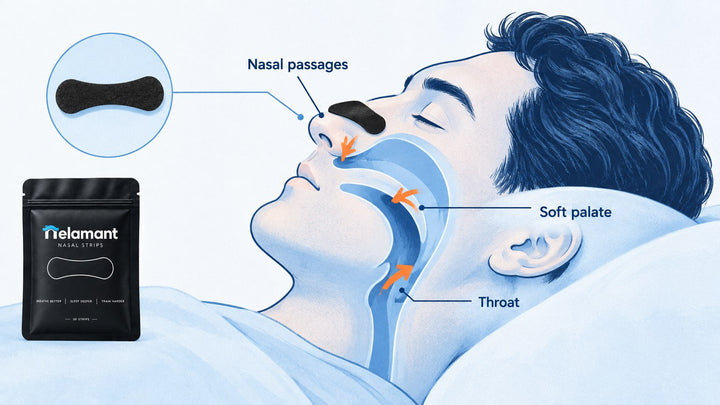
Breathing through your mouth bypasses the nose's filtering, humidifying, and pressure-regulating functions. The result is drier, less efficient airflow and a tendency for the lower jaw and tongue to drop back slightly, narrowing the airway further. Even without a diagnosable condition, mouth breathing and sleep quality are closely linked - habitual mouth breathing correlates with lighter, more fragmented sleep and a higher rate of morning fatigue. If you are regularly waking with a dry mouth or sore throat, mouth breathing during sleep is a likely contributor.
Nasal Congestion and Upper Airway Resistance
A congested or structurally narrow nose creates resistance that forces harder breathing effort throughout the night. In some people this rises to the level of a recognized condition called upper airway resistance syndrome, where the effort of breathing against resistance produces repeated micro-arousals without the full oxygen drops seen in obstructive sleep apnea. The condition is underdiagnosed precisely because the arousals are subtle. See the full guide to upper airway resistance syndrome for a detailed explanation of how it is identified and what can be done about it.
Common Causes of Waking Up Tired After 8 Hours of Sleep
Being tired after 8 hours of sleep is not simply a matter of needing more time in bed. The table below summarizes the breathing-related causes most likely to be responsible, what drives them, and the clues they leave.
| Cause | How it disrupts sleep | Morning clues |
|---|---|---|
| Nasal congestion | Restricted nasal airflow increases breathing effort, causing partial arousals | Stuffy feeling, dry mouth, headache |
| Mouth breathing | Bypasses nasal airway, promotes lighter sleep, allows jaw and tongue to fall back | Dry mouth, sore throat, bad breath |
| Snoring | Turbulent, effortful airflow produces vibration and micro-arousals | Partner complaints, groggy start, dry throat |
| Upper airway resistance syndrome | Repeated effort-related arousals without significant oxygen drops; often undiagnosed | Persistent daytime fatigue despite adequate sleep time |
| Sleep apnea | Repeated airway closures drop oxygen levels, forcing full or partial waking | Gasping, choking sensation, marked daytime sleepiness |
Snoring and sleep apnea are related but distinct. Snoring is noisy, turbulent airflow; sleep apnea involves complete or near-complete airway closure with measurable oxygen drops. For a clear breakdown of where the line sits, see the guide to snoring vs. sleep apnea.
How to Tell If Breathing Is Disrupting Your Sleep
Because most breathing-related disruptions happen below full wakefulness, you may have no memory of them. These signs suggest your sleep is being broken by airway problems rather than lifestyle factors alone:
- Dry mouth every morning - a reliable sign of mouth breathing during sleep.
- Sore or scratchy throat on waking - unhumidified mouth-breathed air irritates throat tissue.
- Morning headache - can reflect mild overnight carbon dioxide buildup from inefficient breathing.
- Unrefreshing sleep despite long hours - you slept eight hours but feel like you slept four.
- Daytime brain fog or difficulty concentrating - a consistent downstream effect of fragmented deep sleep.
- A partner reports you snore or briefly stop breathing - this last one warrants a conversation with a clinician.
- Waking with a stuffy nose you did not have when you went to bed - lying flat can worsen congestion, compounding airway narrowing.
If several of these overlap, the pattern points toward a breathing cause rather than simply staying up too late.

Steps to Improve Nighttime Breathing and Sleep Quality
These steps address the most common nasal and airway contributors to morning fatigue. They are not a substitute for medical evaluation if your symptoms are severe or persistent.
- Clear congestion before bed. A saline rinse can reduce mucosal swelling and remove irritants that narrow the nasal passages. Use sterile, distilled, or boiled-and-cooled water - never tap water directly. Decongestant sprays can help short-term but follow label duration guidance to avoid rebound congestion.
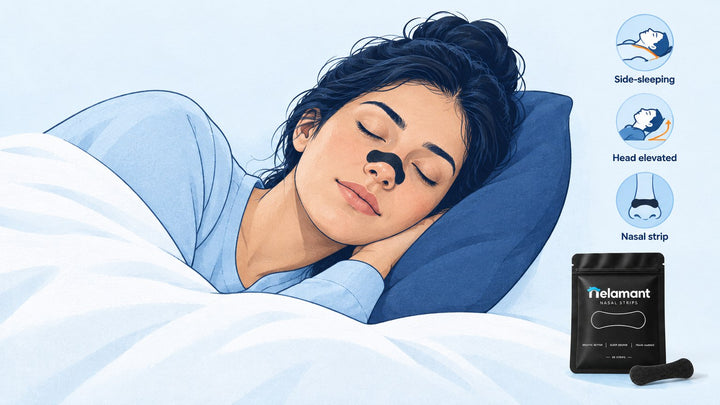
- Sleep on your side. Back sleeping allows the tongue and soft palate to fall toward the airway, increasing resistance. Side sleeping keeps the airway more open for most people. Breathing through your nose while sleeping is significantly easier in a lateral position.
- Raise the head of your bed slightly. A modest incline reduces nasal congestion caused by lying flat by allowing fluid drainage away from the nasal passages.
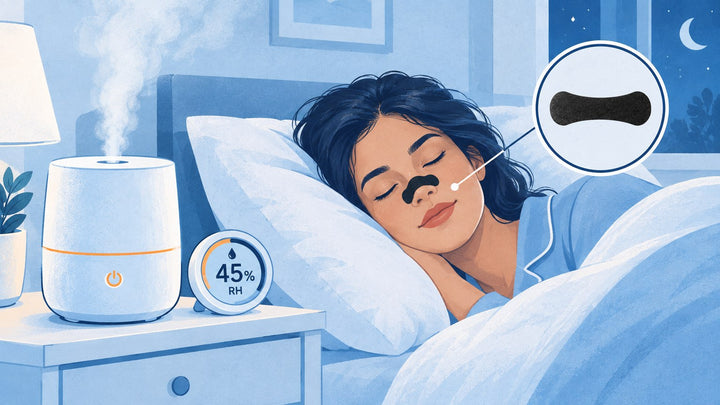
- Address bedroom air quality. Low humidity dries mucous membranes and increases nasal resistance. A cool-mist humidifier set to 40–50% relative humidity can help, provided it is cleaned regularly to avoid mold or bacterial growth. Allergen covers on pillows and mattresses reduce nighttime triggers if allergies are a factor.
- Support the nasal opening mechanically. If your nasal passages are structurally narrow or tend to collapse inward when you breathe deeply, external nasal strips lift and hold the nasal wall open without medication. Nelamant Air Nasal Strips use a wider, more evenly distributed lift across the nasal bridge - designed to open nasal passages with less of a single sharp pull point - and an extra-hold adhesive that resists sweat and overnight movement, so the strip stays where you placed it. They are drug-free and peel off cleanly in the morning. This kind of mechanical support addresses the airway directly, which is the relevant lever when nasal narrowing is what is interrupting your sleep.
- Limit alcohol within three hours of sleep. Alcohol relaxes the upper airway muscles, increasing resistance and snoring. Even moderate intake can noticeably worsen sleep fragmentation in people who already have borderline airway narrowing.
- Establish a consistent sleep schedule. Irregular sleep timing disrupts the circadian rhythm that governs sleep stage timing, making restorative deep sleep harder to reach even when total hours look adequate.

When to See a Doctor
Most of the steps above address nasal and mild airway contributors to morning fatigue. See a clinician if:
- You wake up gasping, choking, or with a sensation of not being able to breathe.
- A bed partner consistently reports that you stop breathing during sleep.
- You remain significantly fatigued during the day despite sleeping adequate hours and trying the strategies above for several weeks.
- You have high blood pressure that is difficult to control - untreated sleep apnea is a known contributor.
- Your symptoms began or worsened sharply rather than gradually.
The distinction between primary snoring, upper airway resistance syndrome, and obstructive sleep apnea matters for treatment. A sleep study is the standard way to distinguish them. For a clear explanation of where that line sits, see the guide to snoring vs. sleep apnea. If nasal congestion is a persistent underlying factor, when to see a doctor for nasal congestion covers the specific signs that warrant evaluation there.
Frequently Asked Questions
Why do I wake up tired even after sleeping 8 hours?
Total sleep time and sleep quality are separate things. If your airway is partially restricted during the night - from nasal congestion, mouth breathing, or snoring - your body generates repeated micro-arousals to restore airflow. Those brief disruptions prevent sustained deep sleep, leaving you feeling unrested regardless of how many hours you logged. Non-breathing causes such as stress, poor sleep timing, and certain medical conditions can also fragment sleep, so if the pattern persists after addressing airway factors, a clinician can investigate further.
Can mouth breathing cause me to wake up exhausted?
Yes. Mouth breathing bypasses the nose's resistance and pressure regulation, tends to dry out the throat, and allows the airway to narrow more easily as the jaw relaxes. The result is lighter, less restorative sleep. Mouth breathing and sleep quality covers this relationship in more detail, including practical steps for encouraging a return to nasal breathing during sleep.
What is upper airway resistance syndrome and could I have it?
Upper airway resistance syndrome (UARS) is a condition where the effort of breathing against a narrowed or resistant airway produces repeated micro-arousals during the night - enough to fragment sleep significantly - without the complete airway closures or oxygen drops that define obstructive sleep apnea. It is frequently misidentified as insomnia or idiopathic fatigue. The full guide to upper airway resistance syndrome explains how it differs from sleep apnea and what evaluation typically involves.
How do I know if my tiredness is from snoring or sleep apnea?
Snoring alone can disrupt sleep through effort and vibration, but sleep apnea involves complete or near-complete airway closures with measurable drops in blood oxygen - and carries more serious health implications. You cannot reliably distinguish them by symptoms alone. Gasping on waking, witnessed breath-holding, and marked daytime sleepiness are more associated with sleep apnea than with primary snoring. A sleep study provides a definitive answer. See the detailed comparison in snoring vs. sleep apnea for a guide to what to look for and when to pursue testing.
Can a nasal strip help me feel more rested in the morning?
If nasal narrowing or congestion is contributing to your fragmented sleep, a nasal strip that mechanically opens the nasal passages can reduce the breathing effort that triggers micro-arousals. It will not address causes that originate in the throat or involve airway collapse at the soft palate level, and it is not a treatment for sleep apnea. For nasal-origin airway resistance, supporting the nasal opening is a direct and drug-free approach to reducing that nighttime effort. The broader picture of nighttime nasal breathing strategies is covered in the guide to breathing through your nose while sleeping.
Persistent morning fatigue is worth taking seriously, and the breathing explanation is underappreciated precisely because the disruptions happen silently. Start with the most accessible changes - sleep position, congestion management, and nasal airflow support - and track whether your mornings shift. If they do not, that is useful information pointing toward causes that need clinical investigation rather than better bedtime habits.