Thomas Tiemann

This article is for general information, not medical advice.
Waking up with dry mouth almost always means your mouth was open while you slept, and air was moving across your tongue and throat all night instead of through your nose. The fix usually starts with figuring out why your mouth fell open-whether that's congestion, habit, or a medication side effect-and then addressing that root cause directly.
- Mouth breathing during sleep is the most common driver of morning dry mouth.
- Nasal congestion, medications, alcohol, and low bedroom humidity all make it worse.
- Fixing the underlying cause-not just drinking water before bed-is what stops it from happening every night.
- Persistent or severe dry mouth, or dry mouth alongside loud snoring or gasping, warrants a doctor visit.
Why You Wake Up With Dry Mouth
Saliva production slows naturally during sleep. That's normal. What isn't normal is waking every morning with a parched mouth, sticky lips, or a raw throat. That level of dryness usually means a significant volume of air moved through your mouth overnight, evaporating what little saliva was there. Breathing through your nose while sleeping keeps that airflow directed through a passage that warms, filters, and humidifies air before it reaches your throat-your mouth does none of those things.
Mouth Breathing Is the Most Common Culprit
When your mouth falls open during sleep, every breath draws dry room air directly across your tongue, palate, and throat. Eight hours of that strips moisture faster than your salivary glands can replenish it while they're in their overnight low-production phase.
Most people who mouth-breathe at night aren't aware they do it. If you wake up with a dry or sore mouth, bad breath, and a stuffy feeling despite sleeping a full night, there's a reasonable chance your mouth was open for much of it. The full picture of why you breathe through your mouth when you sleep-from anatomy to congestion to learned habit-is worth understanding, because the cause shapes the fix.
Nasal Congestion Forces the Switch
A blocked nose leaves you no practical choice but to breathe through your mouth. Allergies, a cold, a deviated septum, or swollen nasal tissue can all narrow airflow enough that your body defaults to mouth breathing the moment you're too drowsy to consciously compensate.
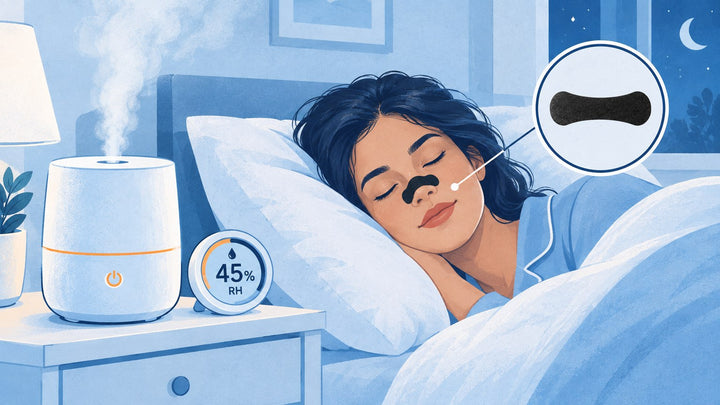
If your dry mouth is worst during allergy season, when you have a cold, or consistently in dry winter months, congestion is likely part of the story. Adding a humidifier to help with a stuffy nose at night can reduce nasal tissue dryness and make it easier to keep breathing nasally through the night. Use distilled or demineralized water in your humidifier and clean it regularly to avoid spreading bacteria or mold.
Medications That Reduce Saliva
A wide range of commonly prescribed and over-the-counter medications list dry mouth as a side effect. Antihistamines, certain antidepressants, blood pressure medications, and decongestants are among the drug classes most frequently associated with reduced saliva flow. If your dry mouth started around the same time as a new medication, that's worth noting and raising with the prescribing clinician. Do not stop or adjust any prescribed medication without medical guidance.
Other Contributing Factors
Several habits and environmental conditions make mouth-breathing-related dry mouth worse even if they aren't the primary cause:
- Alcohol before bed - relaxes the muscles that help keep your airway open and your mouth closed, and acts as a mild diuretic.
- Caffeine late in the day - mildly dehydrating and can fragment sleep, increasing restlessness and mouth-open periods.
- Low bedroom humidity - even nasal breathers notice more dryness in very dry air; target roughly 40–50% relative humidity.
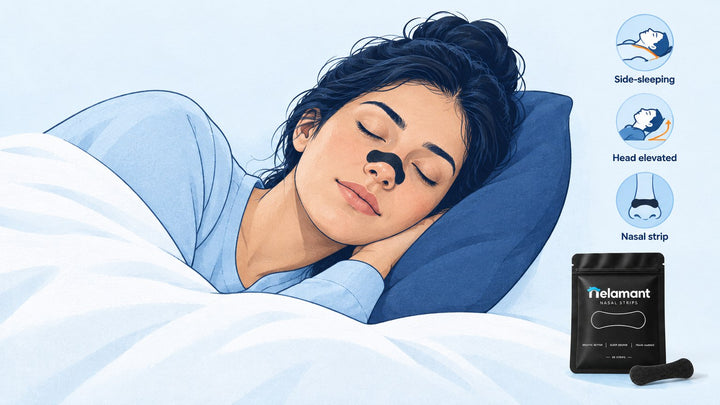
- Sleeping on your back - gravity makes it easier for your jaw to drop open; side sleeping often reduces mouth breathing naturally.
- Snoring - if you or a partner has noted snoring, the vibration and open-mouth posture usually go together.
How to Fix Dry Mouth at Night: Practical Steps
Working through these steps in order targets the most common causes first and builds on each other. You don't need to implement all five at once-start where you recognize the most likely cause.
-
Address the mouth-breathing root cause.
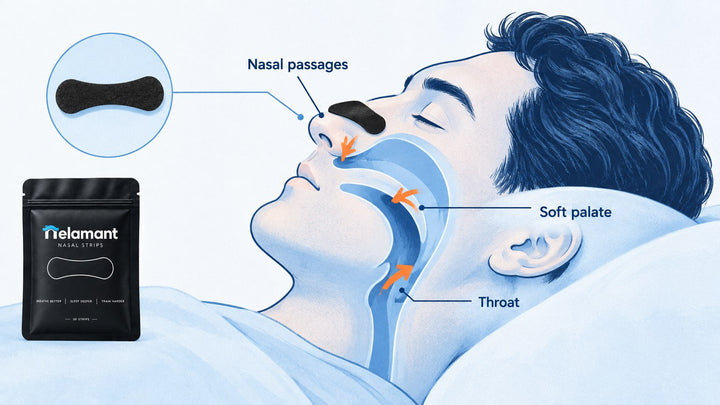
This is the highest-leverage step. If your nose can stay open and clear, your mouth is far less likely to fall open during sleep. For people whose mouth breathing is linked to mild nasal narrowing or congestion, an external nasal strip gently lifts the sides of the nasal passages to improve airflow without any medication. Nelamant Air Nasal Strips are designed with a wider, more balanced lift across the bridge to support easier nose breathing through the night, and the extra-hold adhesive is built to stay in place through movement and overnight sweat. If you're curious about pairing a nasal strip with other tools, see the guide to using mouth tape and nasal strips together-which also covers when that combination makes sense and when it doesn't.
Nasal strips support the nasal opening mechanically; they don't treat structural obstruction, an obstructed throat, or all causes of mouth breathing. If your nose feels clear but your mouth still opens, the cause may be muscular, positional, or something else worth investigating.
-
Add moisture to the bedroom air.
A cool-mist or ultrasonic humidifier placed a few feet from the bed can measurably reduce morning mouth dryness in dry climates or heated indoor environments. Use distilled or demineralized water, and clean the unit according to the manufacturer's instructions to avoid introducing airborne irritants. See the full guide to using a humidifier for a stuffy nose for setup and maintenance details.
-
Adjust bedtime habits.
Cut alcohol and caffeine at least three to four hours before bed. Drink enough water during the day so you're well-hydrated at bedtime, but avoid large amounts right before sleep if that disrupts the night. Rinsing with a fluoride mouthwash designed for dry mouth before bed can offer some overnight protection. Try shifting to side sleeping if you currently sleep on your back; a body pillow or pillow placed behind your back can help maintain the position.
-
Review your medications with a doctor or pharmacist.
If you started a new medication shortly before the dry mouth began, mention it at your next appointment. There may be an alternative formulation, a timing adjustment, or a saliva substitute that helps. Don't adjust or stop prescribed medications on your own.
-
Support oral health in the meantime.
Dry mouth increases the risk of cavities and gum irritation because saliva plays a protective role. Brush and floss before bed, consider an alcohol-free fluoride toothpaste, and talk to your dentist if dry mouth is a regular occurrence. Over-the-counter saliva substitutes (sprays, gels, lozenges) can provide short-term relief but don't solve the underlying cause.

When to See a Doctor
Most dry-mouth-on-waking is manageable with the steps above. But some presentations call for professional evaluation:
- Dry mouth accompanied by loud snoring, gasping, choking, or witnessed pauses in breathing. These can be signs of sleep apnea, which requires proper diagnosis. See the guide to the difference between snoring and sleep apnea to understand where the line is.
- Persistent dry mouth during the day, not just in the morning, which can indicate a systemic condition or salivary gland problem.
- Dry mouth alongside significant nasal obstruction that doesn't respond to home measures-this may need structural assessment. A clinician can also help you understand when nasal symptoms deserve further attention; see when to see a doctor for nasal congestion for a practical guide.
- Dental damage such as rapidly developing cavities or persistent gum irritation linked to dry mouth.
- A new or worsening medication side effect you want properly managed rather than just tolerated.
Don't delay a visit if symptoms are severe, worsening, or affecting your quality of life. The steps in this article address common functional causes; they're not a substitute for evaluation when something more is going on.

Frequently Asked Questions
What causes dry mouth at night?
The most common cause is mouth breathing during sleep, which allows air to evaporate saliva from the mouth all night. Nasal congestion, low bedroom humidity, alcohol before bed, and certain medications-particularly antihistamines, antidepressants, and blood pressure drugs-are also frequent contributors. Often it's a combination of factors rather than a single cause.
Can mouth breathing cause dry mouth when sleeping?
Yes, this is the primary mechanism for most people. When your mouth is open during sleep, every breath draws air across your tongue and palate. Saliva production is already reduced during sleep, so the evaporating effect of moving air quickly leads to significant dryness by morning. Closing the mouth-by addressing congestion, using a nasal strip, or adjusting sleep position-is usually the most effective fix.
Does a humidifier help with dry mouth at night?
It can, particularly if your bedroom air is dry or heated. Higher ambient humidity slows the evaporative drying effect on your mouth and nasal passages. It works best as a complement to addressing the mouth-breathing cause directly, rather than as the sole fix. Use clean, distilled water and maintain the humidifier regularly.
Can nasal strips help with dry mouth in the morning?
For people whose morning dry mouth is driven by mouth breathing due to nasal narrowing or mild congestion, yes-a nasal strip can help by making nasal breathing easier, which encourages the mouth to stay closed. They support the nasal opening mechanically. They won't help if the mouth breathing has a different cause, such as a structural throat issue, sleep apnea, or a jaw-related problem.
Is waking up with dry mouth a sign of sleep apnea?
Dry mouth alone isn't diagnostic of sleep apnea, but it can be one of several signs. If your dry mouth comes alongside loud snoring, waking up gasping or choking, unrefreshing sleep, or daytime sleepiness, those are reasons to speak with a doctor rather than self-treating. Sleep apnea requires proper diagnosis and isn't addressed by nasal strips or humidifiers alone. The guide to snoring versus sleep apnea explains the key differences.
The Bottom Line
Waking up with dry mouth every morning is almost always telling you that your mouth was open during sleep. The productive response isn't to reach for a glass of water every morning-it's to figure out what's keeping your nose from doing its job at night. Start by ruling out congestion, reviewing any medications, and making simple habit and environment adjustments. If nose breathing is the goal, removing the barriers to it-clear nasal passages, appropriate humidity, a consistent sleep position-is the path that actually changes the pattern. Persistent, severe, or symptom-accompanied dry mouth is worth a conversation with your doctor or dentist rather than something to manage indefinitely on your own.