Thomas Tiemann

This article is for general information, not medical advice.
If your throat feels raw or scratchy first thing in the morning but improves within an hour of being awake, mouth breathing overnight is a very likely cause. When your mouth stays open while you sleep, unfiltered, unhumidified air flows directly over the soft tissues of your throat, drying them out. The irritation is real, but it is usually mechanical - not an infection - and it is addressable.
- Morning sore throat that clears up after drinking water or talking for a while is a strong signal of overnight mouth breathing, not illness.
- The root cause is almost always a blocked or narrow nasal passage forcing you to breathe through your mouth.
- Opening nasal airflow before bed, adding humidity to the room, and adjusting sleep position can all reduce the problem.
- If the soreness is severe, lasts all day, comes with fever, or keeps recurring despite addressing nasal blockage, see a doctor.
Why You Wake Up With a Sore Throat
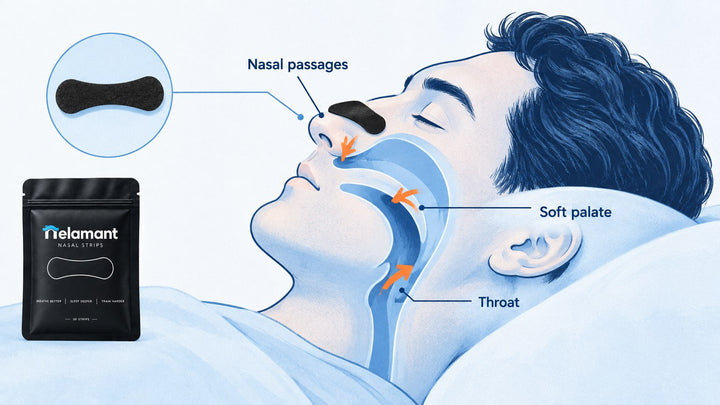
Your nose does three things your mouth cannot: it filters particles, warms incoming air, and adds humidity before air reaches your throat and lungs. When you breathe through your nose, the mucous membranes in your nasal passages handle most of that conditioning work. When you breathe through your mouth instead, air arrives at your throat cool, dry, and unfiltered for hours at a stretch.
The result is a layer of throat tissue that has essentially been dehydrated overnight. The mucous membrane that lines your throat thins out, micro-irritation accumulates, and you wake up feeling like you swallowed sandpaper. A glass of water or a hot drink usually brings noticeable relief within minutes - which would not happen if a virus or bacteria were the cause.
For a broader look at why nighttime nasal breathing matters and what you can do to support it, see the full guide to how to breathe through your nose while sleeping.
How Mouth Breathing Dries Out Throat Tissue
Mouth breathing bypasses the nasal turbinates - the scroll-shaped structures that humidify and warm air on its way in. Air entering through the mouth contacts the throat and soft palate at lower humidity. Over a seven- or eight-hour sleep, that sustained dryness causes the throat's mucous lining to lose moisture, become irritated, and sometimes swell slightly. The sensation ranges from mild scratchiness to a sharp, raw feeling that fades as normal hydration restores the tissue.
Other Common Overnight Causes
Mouth breathing is the most common culprit, but a few other factors can contribute or overlap: low indoor humidity (especially in winter with forced-air heating), sleeping with a fan blowing directly at your face, acid reflux that creeps up while you lie flat, or the early stages of a cold or throat infection. The key distinguishing feature of mouth-breathing irritation is its quick resolution after hydration and its absence of fever, swollen glands, or worsening through the day.

How to Tell If Mouth Breathing Is the Cause
Knowing whether your morning sore throat is mechanical dryness or the start of an illness helps you decide what to do about it. The pattern of symptoms is usually enough to tell them apart without any special equipment.
Understanding the full picture of why your mouth falls open during sleep in the first place is worth reading separately - the guide to why you breathe through your mouth during sleep covers the physiology and the common triggers in detail.
Signs It Is Dryness, Not Infection
- Soreness or scratchiness is most intense right after waking and fades within 30–60 minutes.
- Drinking water, tea, or any warm liquid brings quick relief.
- No fever, no swollen lymph nodes in the neck, no difficulty swallowing solid food.
- The pattern is consistent - it happens most mornings, not just once.
- You may notice your lips are also dry or chapped, or that your mouth feels sticky when you wake up.
If the sore throat is worsening as the day goes on, is accompanied by fever, or you have white patches at the back of the throat, those are signs of infection rather than dryness and warrant a call to your doctor.
What Drives Mouth Breathing at Night
Most people do not choose to breathe through their mouth while they sleep. Something is blocking or narrowing their nasal airway and the body defaults to the easier route. The companion article on waking up with dry mouth covers the overlap between mouth breathing, dry mouth, and overnight dehydration in more detail.
Nasal Congestion and Blockage
Congestion from a cold, allergies, a structural issue like a deviated septum, or enlarged turbinates is the most common driver. When the nasal passages are partially or fully blocked, the pressure needed to pull air through them during sleep is simply too high, and the jaw relaxes open. Even mild congestion that feels manageable during the day can become a real obstacle when you are lying flat and nasal tissue swells slightly with pooling blood.

Sleep Position and Habit
Sleeping on your back makes mouth breathing more likely because the jaw tends to fall open and the tongue can drop toward the back of the throat. Side sleeping generally keeps the airway in a position that makes nasal breathing easier. Some people mouth-breathe out of habit even when their nose is clear - often a pattern that developed during a period of congestion and never fully resolved.
How to Stop Waking Up With a Sore Throat
Addressing the root cause - nasal airflow - is more effective than treating the soreness after the fact. These steps work together; combining two or three of them tends to produce better results than any single change alone.
- Clear your nasal passages before bed. Rinse with a saline spray or nasal rinse (using sterile, distilled, or boiled-and-cooled water - never untreated tap water directly in the nasal cavity) to reduce swelling and remove allergens. If congestion is from allergies, following your regular allergy management routine consistently matters more than any single night's fix. Do not stop prescribed treatments without speaking to your doctor first.
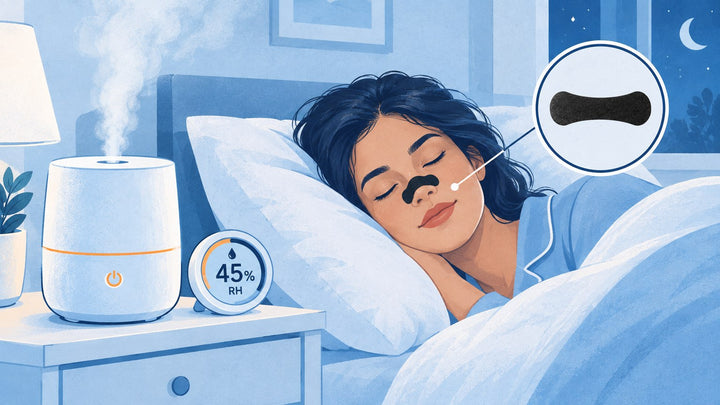
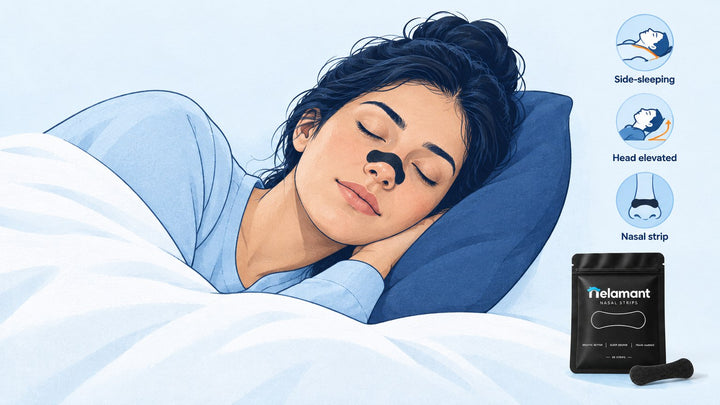
- Support your nasal opening with an external nasal strip. If congestion or a narrow nasal valve is collapsing during sleep, a nasal strip placed across the bridge of the nose can help hold the nasal passages open mechanically throughout the night. Nelamant Air nasal strips use a wider, balanced lift across the bridge rather than a single pull point, and the extra-hold adhesive is designed to stay in place through hours of sleep. They are drug-free and work by physical support alone. If you are waking up with a raw throat because your nose won't stay open at night, this is one practical thing to try before bed.
- Add a humidifier to your bedroom. Raising indoor humidity reduces how much moisture the throat loses even if some mouth breathing continues. See the guide on using a humidifier for a stuffy nose at night for guidance on placement, humidity targets, and keeping the unit clean to avoid introducing mold or bacteria into the air.
- Sleep on your side. Even if you start on your back, a body pillow or a pillow tucked behind your back can reduce the chance of rolling supine. Side sleeping is consistently associated with less jaw-drop and less mouth breathing in people prone to it.
- Stay well hydrated during the day. Arriving at bedtime already mildly dehydrated means your throat starts the night with less moisture reserve. Drinking enough water through the day does not prevent mouth breathing, but it does reduce how severe the morning irritation feels.
When to See a Doctor
A sore throat that clears by mid-morning and follows the dryness pattern described above is unlikely to need medical attention on its own. You should contact a doctor or healthcare provider if:
- The soreness is severe, does not improve through the day, or is getting progressively worse over several days.
- You have a fever, swollen glands, difficulty swallowing, or white patches in your throat.
- You are waking up gasping, choking, or with a sense that your breathing was interrupted during sleep - these can be signs of sleep apnea, which requires medical evaluation.
- You have addressed nasal congestion consistently and are still waking up with a sore throat every morning for several weeks.
- The problem is accompanied by persistent loud snoring that concerns you or a bed partner.
For more on the difference between ordinary snoring and sleep-disordered breathing that needs clinical assessment, see the guide to snoring versus sleep apnea. If recurring nasal congestion is the suspected driver, the article on when to see a doctor for nasal congestion outlines the signs that point to an underlying condition worth investigating.
Frequently Asked Questions
Why do I wake up with a sore throat but feel fine by midday?
That recovery arc is the clearest sign that dryness - not infection - is the cause. Tissue that has been dehydrated overnight rehydrates within an hour or two of normal breathing, talking, and drinking. An infection-related sore throat typically does not resolve that quickly and often worsens as the day progresses.
Can mouth breathing at night really cause a sore throat every morning?
Yes. Consistent overnight mouth breathing exposes the throat lining to hours of dry, unfiltered air. The mucous membrane dries out, becomes irritated, and produces a scratchy or raw feeling on waking. Because the exposure repeats every night, so does the symptom - until the underlying cause of mouth breathing is addressed.
Does a humidifier help with a morning sore throat from mouth breathing?
It can help reduce the severity by raising indoor humidity, which slows moisture loss from the throat even when the mouth is open. A humidifier does not stop mouth breathing, though - it reduces one consequence of it. Addressing nasal airflow is the more direct fix. The two approaches used together tend to work better than either alone.
Should I be worried if my sore throat disappears after drinking water?
Not on its own, no. Rapid relief from hydration is typical of dryness irritation. The concern would be if the soreness keeps returning every morning for weeks despite making changes, or if other symptoms like fever or swollen glands appear alongside it. Persistent symptoms warrant a conversation with a doctor.
For a complete picture of the sleep and breathing cluster this article belongs to, visit the pillar guide on how to breathe through your nose while sleeping.